
E-ink screen challenges
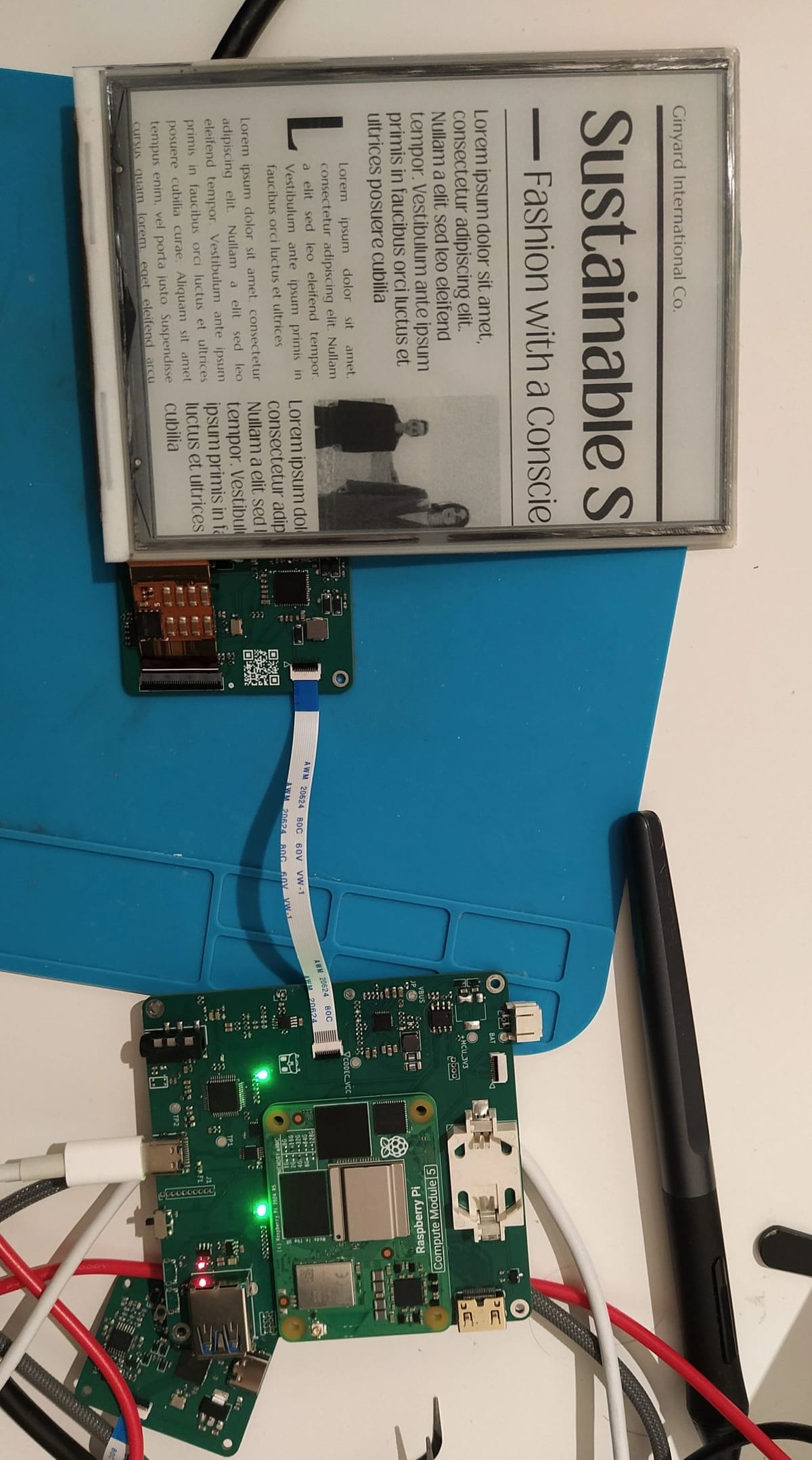
The more I work on building Daptar (दप्तर), the more I realize how prohibitive building in the consumer electronics space really is. The entry barriers are insane, not just the capital requirements, but access itself. Access to talent, to quality components, reference work, to cutting-edge tech, and as a small 3-person team actually building it and not just white-labeling, it’s a near-impossible task. Sure, having a bit of money and reputation gets you through the door, but you still need an absurd level of patience to build anything meaningful. Some technologies are so locked down that only a handful of people can help you. Getting access to proper documentation is almost impossible for small teams.
After more than a year of banging my head against the wall, literally almost crying at times, I finally managed to display something sensible on the e-paper screen. I could only spend a couple of hours a week on it, but still, that’s a long time to stick with a single problem. This is my sixth hardware revision and countless blind iterations on the software. I fried at least four displays, all of which I sourced by begging a distributor in China. I didn’t get much help getting any of it to work. All this to drive bigger and faster displays with commodity hardware, bringing the overall device cost down.
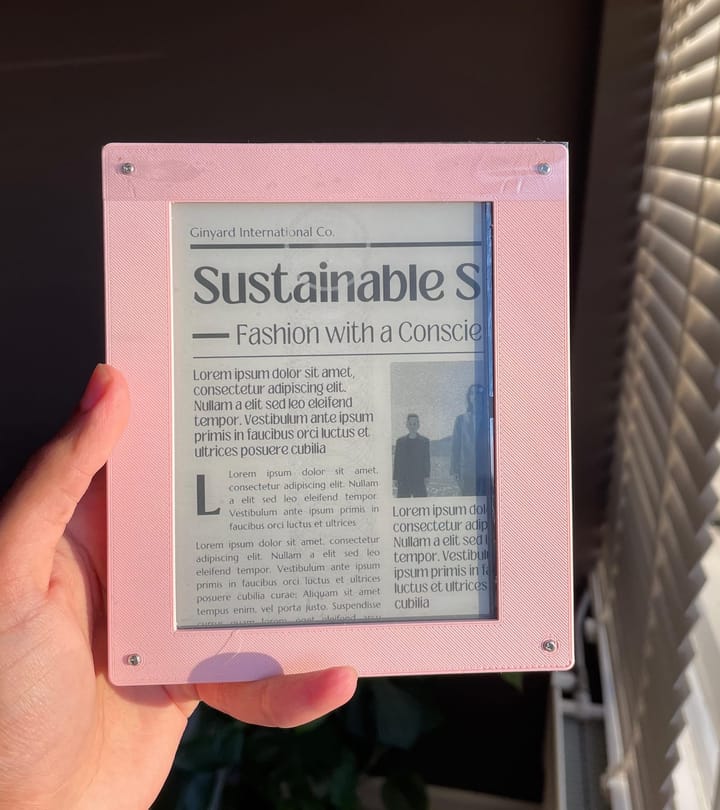
Eventually, I decided to prototype using harvested parts from old e-readers. The challenge with harvested parts is that they’re much harder to work with, but with patience and perseverance, I was able to piece things together, digging through open-source projects for months to understand the “why” behind everything. And today, here it is: an article displayed, crisp, clear, and breathtaking. Making it look perfect took another two weeks; with e-ink, every batch of display is different, and even ambient temperature changes the results.
Comments ()