
Handwriting tech - POC in action
Update on the Daptar (educational tablet) project — passive pen detection in action 🔥!
Electromagnetism always felt like magic when I first learned it in school. Seeing it used here for pen input still feels the same.
In my blog post introducing Daptar tablet, I mentioned that handwriting is critical for learning, so we need a solution that makes writing on tablets feel natural. Current options — AES (Apple) and EMR (Wacom, Huion, etc.) — work well but are mostly tied to high-end devices. Sourcing these solutions for a prototype has been a challenge.
That’s why I explored Project Patchouli, an open-source implementation based on expired patents. For Daptar, I adapted the author’s work on a different platform. The demo works (video attached), though the pad is small. A larger, improved version is already in manufacturing.
The project’s author was a huge help in debugging and getting this working — big thanks to them. If you want to learn more, you should definitely join their Discord. I’ve also added a few YouTube videos from others that explain the technology in more detail.
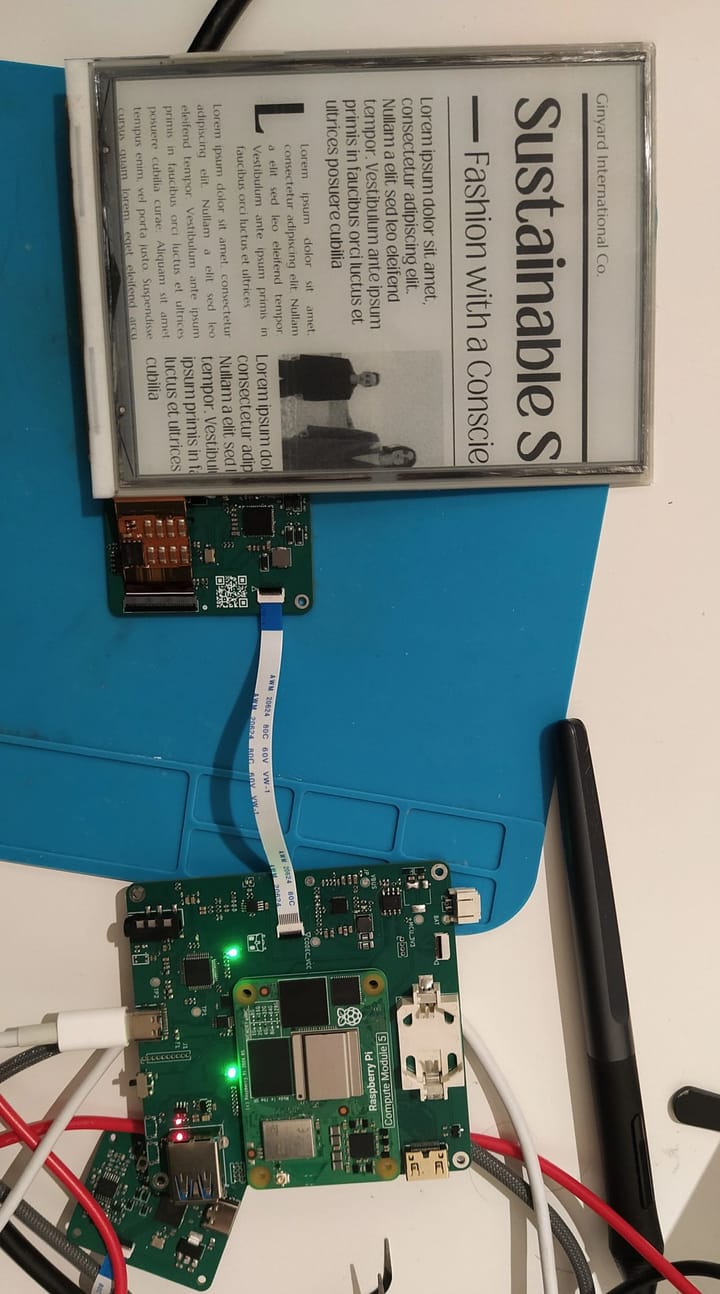
I’m using a Raspberry Pi RP2040 instead of STM32 to drive the panel and detect pen + pressure. This revision will be part of the tablet prototype, alongside an e-ink display (more on that in the next update).
Links -
1. Daptar Tablet Blog Post - https://lnkd.in/ep5nTVDb
2. Project Patchouli Discord - https://lnkd.in/e3WBNyQg
3. Project Patchouli - https://lnkd.in/eJT45JEc
4. Project Patchouli Video - https://lnkd.in/eeUNWqaW
5. Scanlime’s Tablet Prime - https://lnkd.in/euXTeNYK
6. Scanlime’s Tablet Teardown - https://lnkd.in/efFwta-K
P.S. Passive pens are called passive because they work without batteries.

Comments ()